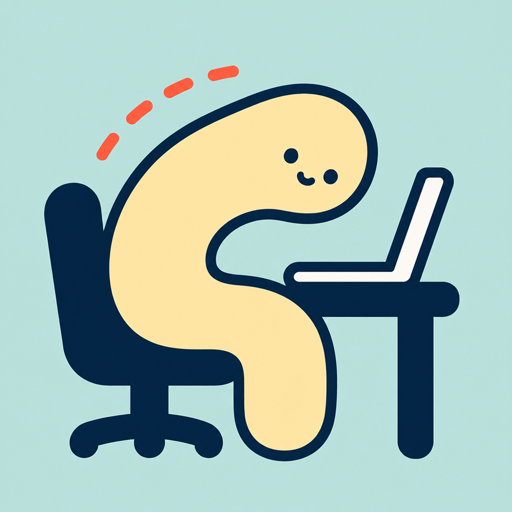

Your attention moves first, then your head follows
Forward-head posture often starts with something very ordinary: you are trying to see, read, respond, or concentrate. Your eyes move toward the work, your chin follows, and the rest of your posture adapts around that reach.
This is why it can feel automatic. You are not deciding to slouch. You are solving the immediate problem in front of you, then staying there long enough that the position becomes your default for the next hour.
Screens create a tiny pull all day
Laptops are especially sneaky because the keyboard and screen are attached. If the keyboard is comfortable, the screen may be low. If the screen is high, the keyboard may be awkward. Phones and tablets add another layer because they invite your head downward.
OSHA's neutral-position guidance describes the head as level, forward-facing, balanced, and generally in line with the torso. That is a helpful reference point, but real work involves movement. The goal is to return to that balanced position often enough that forward drift does not become invisible.
A cue beats a lecture
Most people already know they should sit better. The problem is not knowledge; it is timing. A reminder that arrives after two hours of slouching feels like a scolding. A reminder that arrives near the start of the drift feels like a useful nudge.
That is the posture-habit sweet spot: catch it while the reset is still small. Bring your head back over your body, let your shoulders relax, and continue. No ceremony required.
Use trends to see the pattern
Forward-head posture tends to have a rhythm. Maybe it shows up during deep focus, late afternoon fatigue, gaming, writing, or meetings where you are half-listening and half-scrolling. A single reminder can help in the moment, but trends help you see the larger loop.
Noodle Posture pairs live cues with history: upright minutes, check-ins, sessions, and posture logs. That makes the habit less mysterious. You can see when you are improving and when your desk setup or schedule still needs help.
Noodle Posture is a habit and awareness tool, not medical care. If you have persistent pain, numbness, weakness, or symptoms that worry you, talk with a qualified health professional.